Discovering Mirror Worlds!
Welcome again!
Today, we are going to go trough another approach to do in class but for that, I have to welcome you first to the land of mirror magic—where one half tells the story, and the other half reflects it right back! In this entry, we will see how our young Symmetry Explorers can discover in their primary classes how this geometric concept becomes exciting, hands-on and even artistic.
What is Symmetry, Anyway?
Symmetry is when something is the same on both sides, like your face (almost), a butterfly’s wings, or a perfectly folded paper heart. But teaching it does not have to mean drawing lines on worksheets. And as Weyl says (2015), symmetry is so important that even beauty is based on how much well-proporcionated you are, and that means, how symmetrical you are.
That is why we are here today we want to see how we can teach it in a playful way. Integrating visual arts into mathematics instruction can foster both creative expression and mathematical reasoning (Eisner, 2002). Now that we know this, let’s turn it into an adventure!
Hands-On Activities to Try
Mirror Me!
For this activity you will need to grab a small mirror and place it next to half a drawing...voilà! You have just reflected the shape. This simple trick wows young learners and makes symmetry feel like real magic and attractive for them.
Half-and-Half Art
Give students one side of a figure (you can draw it or print templates), and challenge them to complete the other half exactly, like a geometry detective. Moreover, thanks to this you are also implementing aspects form the subject of arts.
Symmetry Scavenger Hunt
The most playful one and that the children will love s they will be moving around consist on a hunt around the classroom or playground to find symmetrical objects: window panes, chairs, flowers, even classmates’ shirts!
Digital Symmetry Tools
Thankfully to bring geometry to life is easier than ever thanks to the interactive websites that nowadays exist but let’s just talk bout the free ones::
Symmetry Artist by Math is Fun: A digital drawing pad where your lines are instantly reflected.
Toy Theater Symmetry Game: Students draw on one side of the line, and the site mirrors it for them. Perfect for early learners! They will see quickly how symmetry works!
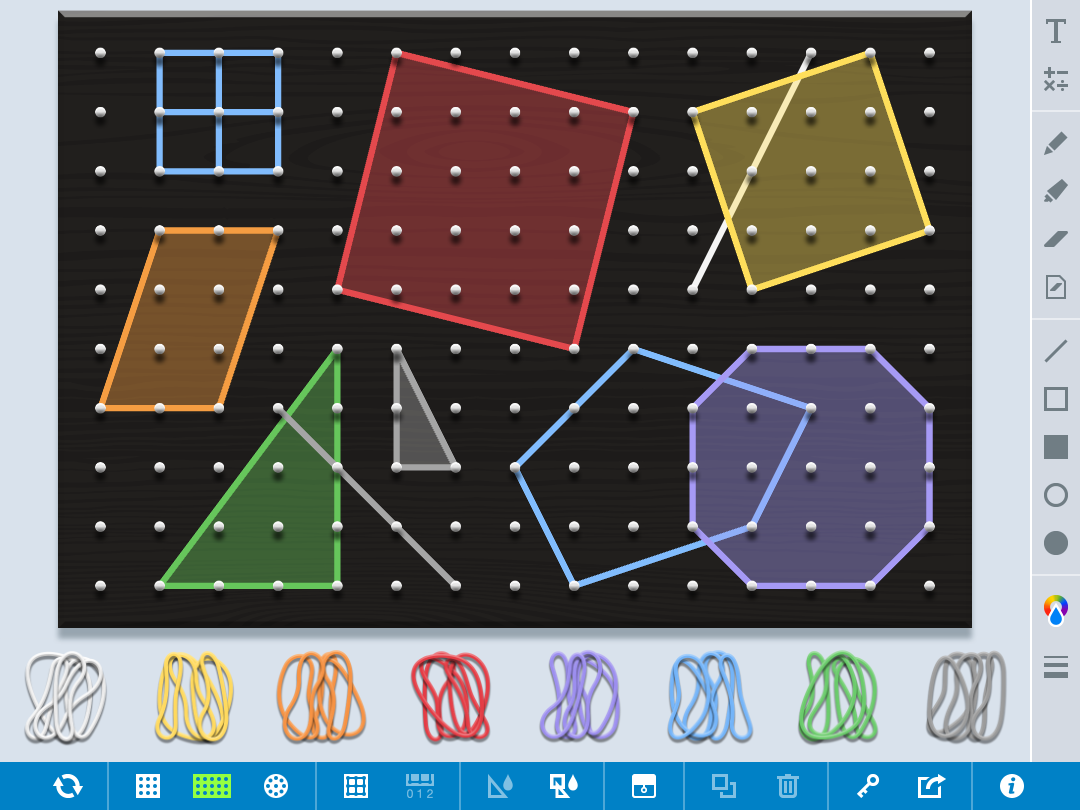
Recommended App:
Mixing Symmetry and Art
Symmetry is the secret ingredient in artistic masterpieces. Try:
Butterfly paintings: Fold a paper in half with a blob of paint on one side. Open it up…and look how each part is identical one to another.
Mandala designs: Remember we talked about it already right? Well it turns out that this can be used also for teaching symmetry! Use rulers and protractors to create stunning radial symmetry artworks.
Teaching Tip: Use the Mirror Metaphor
I am going to share a recommendation for you to take if you see it as something valuable for your classes!!
Go and ask students: “If this shape looked into a mirror, what would it see?” This simple question sparks creative thinking and helps them visualize reflection lines naturally.
Symmetry is not just about shapes, it is about balance, harmony, and seeing the world in pairs. Whether through mirrors, movement, or mandalas, teaching symmetry can turn your geometry lessons into interactive adventures full of creativity and discovery.
So go ahead, hand your students a mirror and a pencil and let them explore the wonderfully symmetrical world around them!
S33 Y0U 1N 7H3 N3X7 3N7RY!
REFERENCES:


Comentarios
Publicar un comentario